“I Have Seen the End” by Brock’s Folly [a review]
November 9, 2016

From the liner notes to their new record I Have Seen the End, the young band “Brock’s Folly” appear to be entering an early retirement. A few albums under their belt, the energetic, theologically-minded five-piece formed while studying at Bryan College in Tennessee. The members have since graduated and the new project feels like a master thesis, reflecting on all that’s happened across a short discography. The band’s theology is mature, taking a hard look at hypocrisy, pride, and redemption both outward, in a world full of pain and violence; and inward—at hearts drowning in ego and corruption. Heavy themes indeed, but they never overwhelm. Every hard truth rides atop a wild folk melody, and grace—the amazing kind—abounds.
You can listen to and purchase their music here, or explore their work with the Nehemiah Foundation for Cultural Renewal here.
“Highway Winds” by Wesley Randolph Eader [a review]
August 23, 2016

When I was younger, I believed in a mystical highway that stretched through the deserts and mountains and byways of America. It beckoned the wandering hearts of lost prodigals. Its asphalt would hum beneath your feet as you pressed down on a gas pedal. But as I got older, and I had been down a road or two, that highway began to lose its magic. I stopped believing in mystery and the power of the open road. I see visions of that lost highway again when I listen to Wesley Randolph Eader’s new record, Highway Winds. I see Woody Guthrie riding a boxcar. I hear Townes Van Zandt singing stories in an old saloon. I see mountain ranges in the far distance, and desert stretched out all around. I find saints and sinners, and I see redemption somewhere on the distant rise. I hear and see and feel it all again. I am swept up in the mystery of the road. This is the wonder of Highway Winds.
You can listen to and purchase the album here.
Only a Dream: Ralph Stanley’s “Cry from the Cross”
July 8, 2016
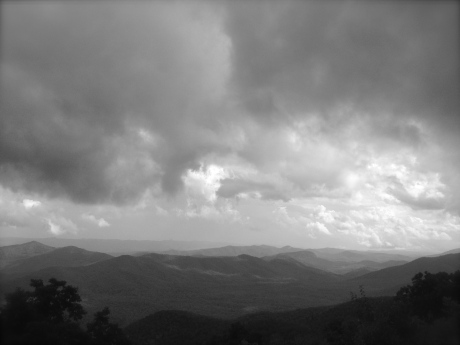
I dreamed about Ralph Stanley the day after he died. I was feeling ill. I crawled into bed and fell into a deep sleep. Over the years, I had visited his hometown a few times, circling to and fro across the caustic back roads of Clinch Mountain. I had once stopped at his house and knocked on his front door, hoping to shake the good doctor’s hand. No one came to the porch but a wandering dog. I read his book, bought his records. And I had stood before his brother’s grave, atop a mountain in the afternoon hours.
I saw Dr. Ralph on stage a number of times in those final years as well. He needed a chair to sit through those sets. His grandson and his band would do most of the work. But every so often he would stand up, he would approach the microphone, and he would drown the audience in that chilling mountain voice.
The dream was short. I found myself in some ghostly façade of the Appalachian south. My family was there. We rode bikes on roads that were too wide and too straight. I don’t remember if Dr. Ralph had even showed up in the dream—only that his essence hovered around it all. I parked my bike at the foot of the Ralph Stanley Museum. It was not the great Victorian house that sits on a hill in Clintwood, Virginia, but a lonely cabin on the side of a highway.
The dream came and the dream went.
I think I experience Dr. Ralph’s music a little differently than most of his fans. I admire the union of voices that the Stanley Brothers created when they sang, the craftsmanship of those bluegrass melodies, but really, I’ve never been much for bluegrass. And as important as his claw hammer banjo is to American roots music, it doesn’t give me pause, or hit me on the head like John Henry’s hammer. With Stanley, it has always been the cold hard lonesomeness that speaks to me. It is that voice, full of Primitive Baptist severity that I won’t forget.
Everything I love about Dr. Ralph comes to a crescendo of Appalachian simplicity on the traditional gospel ballad “Two Coats”. On the closing song from 1972’s Cry from the Cross, a lonesome fiddle floats along on a minor rhythm. Stanley’s voice is as serious as ever. He sings of salvation, of throwing off the old coat of worldly degradation and putting on a new, holy one. He pulls no punches. He adds no flourish or poetry. It’s the aesthetic by which he lived his life. What choice do we have but to believe every word of it?
The dream has since faded. The mountain and the road and the cabin on the hill are gone. Dr. Ralph is gone.
I hope that someday I will knock on a front door and someone will answer. I hope that someday, some light can be shed upon the fractured dream that we all walk around in. And I hope that Dr. Ralph has thrown off the old coat, and that the man of constant sorrow will sorrow no more.
Information gathered from Stanley’s autobiography, “Man of Constant Sorrow”.
“It Did Me Well” by Embleton [classic review]
June 28, 2016
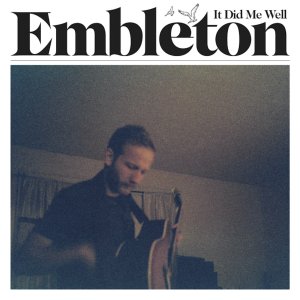
This is an older review of the Embleton’s It Did Me Well, originally posted on this site in March of 2015:
In the song, “Leaving for Good”, Kevin Embleton and his band sing of a wandering friend, caught up in a desire to leave town and find meaning in destinations afar. The road-trippy strings of a country pedal steel guide his journey into the unknown while Kevin himself laments over electric chords. The melodies bounce from gentle to melancholic to rocking, like any good alt-country song should. But the lyrics, so full of ambiguity and mystery, set it apart.
“Leaving for Good” is the first single off of the band’s upcoming full-length record, It Did Me Well, releasing March 10. The song perfectly represents what makes the music of Embleton so communal and so relevant: Kevin paints his songs with bold imagery but omits key details. The listener must draw upon their own experiences to fill in the gaps. Amid country waltzes and strummed melodies, everyone shares the same humanity, the same emotions, the same story.
You can listen to and purchase the album at itunes, amazon or bandcamp. For more information, visit Embletonmusic.com.
“Bright Week” by the Wonderful Mountain [classic review]
June 27, 2016

This is an older review of the Wonderful Mountain’s “Bright Week”, originally posted on this site in July of 2013.
At the beginning of his new album, Bright Week, Chad Marine (a.k.a. the Wonderful Mountain) sings of Saint Antony, the patron of lost things and people. Over a rushed guitar strum, the artist sings,
I fell into the flood
In body and in blood
And I came up bright.
Though the words are profound and spoken with outright seriousness, the song borders on joviality (a far stretch from Marine’s previous work), but I suspect it’s with good reason. He says that the album coincided with his Baptism through the Eastern Orthodox Church. The songs seem to reflect that Baptism, and the pilgrimage that led to it. They are populated by holy Saints of the tradition, by moments of spiritual clarity, and by a renewed sense of joy. He says that there was nothing specific tying the songs together, but listening to them, I can hear themes of rebirth and restoration (and the joy that follows) written all over it.
He translates the tale of martyred Saint Catherine and the paranormal destruction of a torture wheel into a rousing folk number that sounds like a lost Carter Family song. He draws inspiration from the old story of the righteous pelican that wounded herself to feed her young. The stories are ancient, passed down for generations, but they’re full of spiritual vigor and brimming with holy relevance.
There has always been a heavy sense of impending righteousness in Marine’s songs, and though it’s still here, his focus has turned to something that’s, well, brighter. Near the end of the album, perhaps guided home by Saint Antony himself, the artist casts off the pessimism of the world and sheds that unholy darkness that so easily binds us. He gently beckons,
Let’s sing no more songs of hopelessness…
Amazing what a little divine perspective can do.
Bright Week can be found at https://thewonderfulmountain.bandcamp.com/album/bright-week
 let us make a record